Beyond Compliance
For over thirty-five years, the mission of Raising The Standard Consulting (USA) Inc. (RTSC) has been driven by a single, unwavering conviction: that environment, safety, and health (ES&H) are not peripheral line items, but the very foundation of operational excellence. In the high-stakes landscape of industrial consulting, the “standard” is often treated as a static goalpost—a set of rules intended to satisfy a regulatory inspector.
At RTSC, we view the standard as a starting point. Based in Honolulu, our work is dedicated to moving beyond the minimum legal requirements and toward a culture of shared responsibility where the “zero accident” destination is a measurable reality.
Navigating Federal Requirements
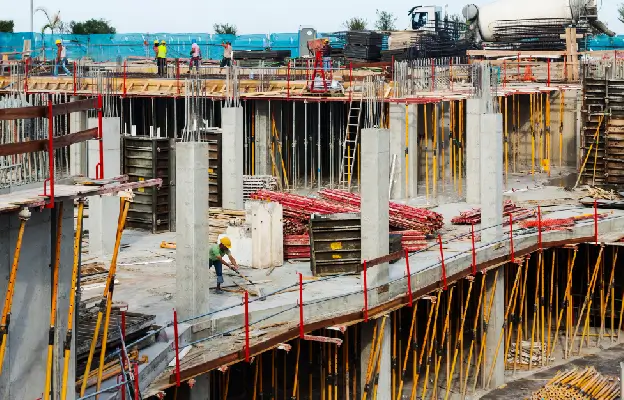
Hawaii presents a unique regulatory environment where state-specific HIOSH standards intersect with federal OSHA requirements and the rigorous EM 385-1-1 manual used by the U.S. Army Corps of Engineers (USACE) and NAVFAC. This intersection necessitates a higher degree of professionalization in safety consulting in Hawaii.
For contractors operating at Pearl Harbor, Kaneohe Bay, Schofield, or on Pacific-wide federal contracts, navigating these hundreds of pages of requirements is a specialized skill. Industry standards are often insufficient for the stringent demands of military and government projects. RTSC provides the expertise to navigate these complex regulations, ensuring your project meets federal standards from initial mobilization to final site clearance, preventing the costly delays and stop-work orders that plague less experienced contractors.
The Human Element: Practical Experience Over Code
Technical knowledge is only one half of the safety equation. Through decades of experience on some of the Pacific’s most complex projects—from vertical construction in Honolulu to $120-million research facilities—we have learned that scientific data identifies risk, but the human element prevents the accident.
We emphasize hands-on and practical training because regulatory codes are useless if the people on the ground lack the knowledge and experience to implement them when the real-world situation arises. Our specialized training modules focus on the ethical responsibility to report hazards and the personal discipline required to resist taking shortcuts that jeopardize lives. When RTSC acts as your partner, we aren’t just managing your liability; we are protecting your legacy.
Multidisciplinary Expertise
Our legacy is built on a consulting team with over 100 years of combined experience in environmental, safety, and health management. The professional composition of our team includes individuals holding advanced degrees in fields such as:
- Chemical Engineering: To manage industrial hygiene and hazardous material exposure.
- Human Kinetics & Environmental Psychology: To address human factors engineering and behavioral safety.
By employing Certified Safety Professionals (CSP), Certified Industrial Hygienists (CIH), Construction Safety and Health Technicians (CHST), and Certified Instructional Trainers (CIT), RTSC ensures that its recommendations are grounded in both scientific rigor and practical field experience.
Resilience Through Disaster Management
The unique geographical position of Hawaii necessitates a specialized focus on disaster and emergency management. This was brought into sharp focus by the January 2018 false missile warning, an event RTSC analyzed to emphasize the necessity of employee preparedness. We advocate for a comprehensive, four-phase approach to emergency management:
- Mitigation: Identifying vulnerabilities (natural or man-made) and implementing proactive measures to lessen their impact.
- Preparedness: Establishing structured warning systems and incident command systems tailored to the specific workforce.
- Response: Utilizing digital communication and social media strategies effectively—filtering the “fire hose” of information to verify official sources.
- Recovery: Developing a strategy to ensure business continuity and minimize downtime following a crisis.
Safety as a Primary Driver of Profitability
For the industrial executive, “Raising the Standard” is not a cost center; it is a strategic asset. The economic return on investment (ROI) is realized through several mechanisms:
- Lower EMR Scores: Proactive hazard identification reduces workplace claims and lowers your Experience Modification Rating (EMR), resulting in significant insurance premium savings.
- Bid Eligibility: Our team provides the qualified Site Safety & Health Officer (SSHO) and Quality Control (QC) credentials required for high-value federal and military contracts.
- Operational Efficiency: A well-organized site with clear hazard controls operates faster and with fewer interruptions, protecting your bottom line.
- Lawsuit Mitigation: Proactive safety management shields your organization from the devastating financial impacts of legal liabilities.
- Workforce Retention: Prioritizing safety prevents the loss of highly skilled workers who might otherwise leave an unsafe jobsite.
Frequently Asked Questions | Safety & Compliance
What is the maximum fine for a willful OSHA violation in 2026?
Following the inflationary adjustments, the maximum penalty for a willful or repeated violation is $165,514.
Does HIOSH follow the same penalty structure as federal OSHA?
Yes. As a State Plan, HIOSH is required to maintain penalty levels “at least as effective” as federal standards. HIOSH typically adopts these adjustments promptly to remain aligned.
What are the primary updates in the latest EM 385-1-1 version?
The latest overhaul reorganized the manual from 34 to 37 chapters, implementing a standardized 10-section format for each chapter to improve navigation. It also introduces a new chapter for Emergency Operations (Chapter 37).
How does a safety consultant help reduce Workers’ Comp rates?
Consultants conduct compliance audits to identify hazards before they lead to claims. By reducing claim frequency and severity, they help lower your Experience Modification Rating (EMR), which is the primary multiplier used to calculate your insurance premiums.
What is the 2026 standard for Data Stewardship in safety?
Under current Data Stewardship protocols, safety professionals now treat operational data with the same rigor as physical hazards. This includes implementing “digital hazard controls” like encryption and restricted access for sensitive incident reports and personnel training records.
What is the difference between Awareness, End User, and “Competent Person” training?
- Awareness: Provides basic recognition of a hazard.
- End User (Authorized User): Provides practical training for employees authorized to use specific systems or equipment on the jobsite.
- Competent Person: Possesses the comprehensive technical knowledge to identify existing and predictable hazards, along with the specific authority to take prompt corrective action to mitigate or eliminate them.
